A massive dust storm, or haboob, swept across the Sahara Desert from western Algeria into Mauritania, Morocco, Western Sahara and the Canary Islands on March 30. The dust stretched for more than 1,000 miles.
As meteorologists observed the dust storm from space via weather satellites, social media users captured the incoming dust storm on camera. One video shows a thick wall of dust and sand moving toward a resident of the town of Tindouf, near the Mauritanian, Western Saharan and Moroccan borders.
How does the dust affect tropical storms in the Atlantic?
While this storm didn't make it too far off the coast, significant amounts of dust can drift westward from Africa across the Atlantic beginning in May. This can inhibit tropical storm formation, or the strengthening of an existing system, because the dusty air has about 50% less moisture than the typical tropical atmosphere.
Strong winds in the dust layer can also substantially increase the vertical wind shear in and around the storm environment, potentially disrupting any storm that forms.
LATEST POSTS
- 1
 'Set up an Army Radio station at President’s Residence': Source close to Katz slams Herzog
 - 2James Webb Space Telescope watches 'Jekyll and Hyde' galaxy shapeshift into a cosmic monster
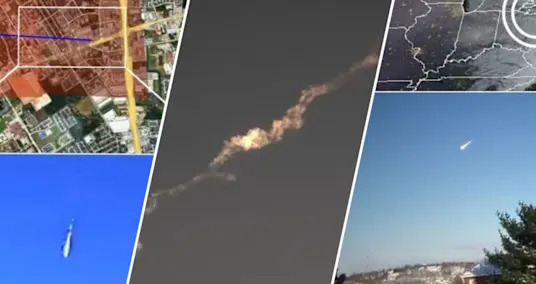
- 3Fireball sightings are surging across the US — here's what's really going on
- 4We analyzed Philly street scenes and identified signs of gentrification using machine learning trained on longtime residents’ observations
- 5New images reveal interstellar comet 3I/ATLAS approaching Earth




- A Manual for Pick Great Lawful Discussion Administrations For New businesses In 2024
- How effective is the flu shot this year? New report shows promising results
- SUVs Known for Their Looks As opposed to Their Capacity
- Ariana Grande to host 'Saturday Night Live' Christmas show with Cher as musical guest, returning after nearly 40 years
- Solar storms can trigger auroras on Earth. This star’s explosion could destroy a planet’s atmosphere
- Al-Sharaa denies he called for 80% of Syrians to return from Germany
- NASA’s Pandora telescope will study stars in detail to learn about the exoplanets orbiting them
- Improving as a Cook: Culinary Experiences in the Kitchen
- Nature carves colossal snowman in Siberia | Space photo of the day for Jan. 2, 2026